
Stories Sewn Into a Seam
/Open your closet for a second. Somewhere in there is a piece of clothing you can't bring yourself to give away, not because you'll wear it again, but because of who you were when you wore it. A wedding. A first job. A goodbye. Clothing holds memory. It's the most ordinary thing in the world, and the most intimate.
Now imagine that intimacy multiplied across 250 years. That is the idea behind Remember the Ladies: Fashion, Freedom, and the Fabric of a Nation 1776-2026, the Woodrow Wilson Presidential Library & Museum's signature exhibition for America's 250th anniversary, opening June 14. It tells the story of American women through the clothes they actually wore, from the nation's founding to the present day, in garments that belonged to women of every kind: the famous and the forgotten, the celebrated and the everyday.
We are taught to read history through documents: speeches, treaties, the papers of presidents. But a dress is a document too, and often a more honest one. What a woman wore records who she really. You can read a life in a hemline. The weight of a fabric tells you whether she worked; a mended elbow, what she could afford; a waistline, what her body was expected to be. Women’s clothing has too often been treated as trivial, precisely because it belonged to women. This exhibition treats it as evidence. Walk the galleries in order. You will see women’s freedom grow.
There is no better place to make that case. It was during Woodrow Wilson's presidency that American women won the vote, with the 19th Amendment ratified in 1920. Wilson was slow to support a national suffrage amendment, but once he understood what was at stake, he championed it wholeheartedly. An exhibit devoted to the lives of women, told through their clothing, belongs in the museum of the president who watched them claim their rights in this country.
The exhibition runs from 1776 to the present. Here are three of the many items on display.
Begin with the purple. A 1913 gown of deep purple velvet, ordered from one of New York's premier importers of Paris fashion for the wedding of a Wilson daughter, stops nearly everyone who passes it. Photographs do not do the color justice. And there is a secret folded inside the bodice: handwritten notes left during a home fitting more than a century ago. It is the whole exhibition in a single garment, a finished, formal beauty with a private human hand still visible in the seam.
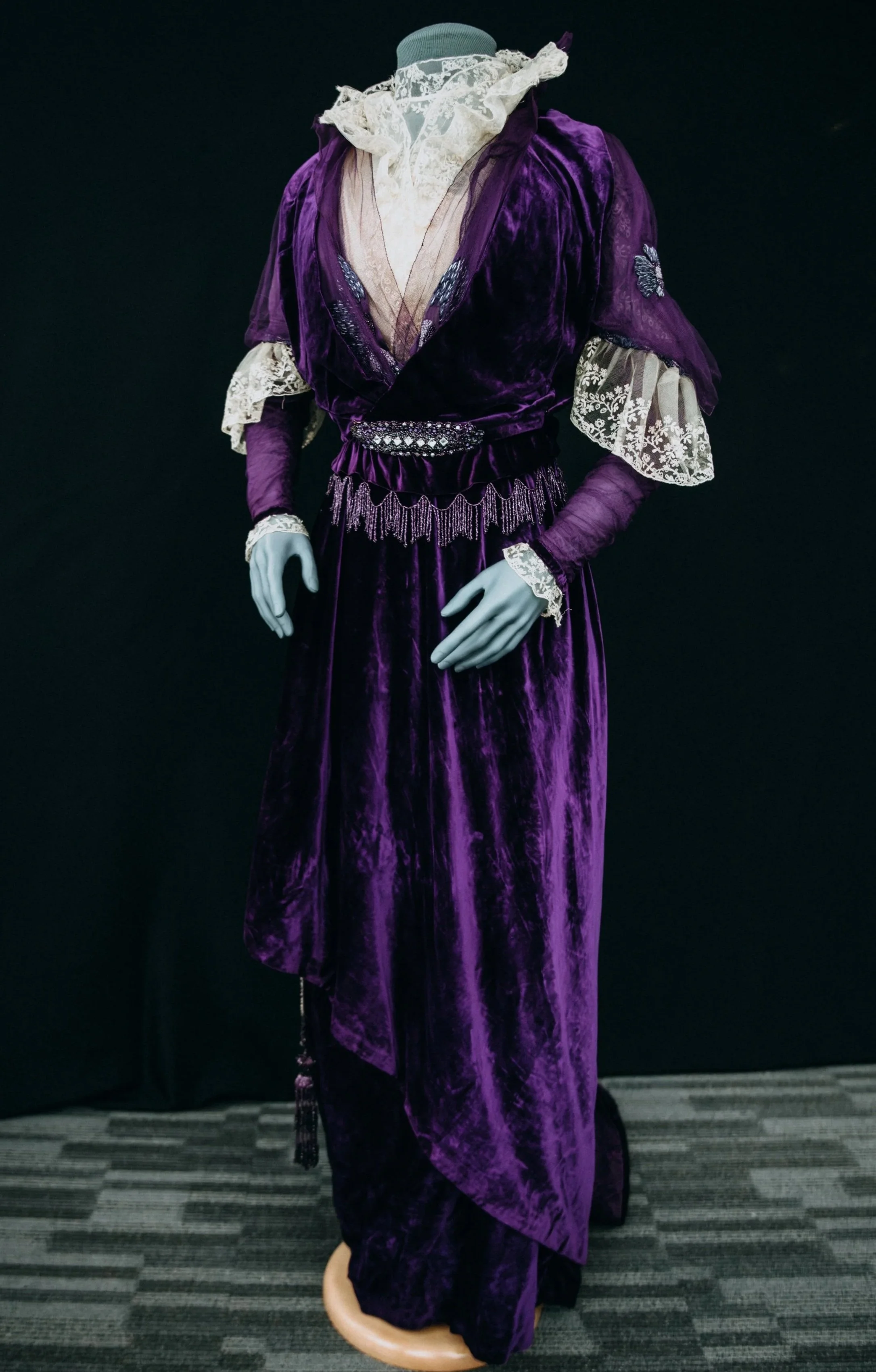
Image by Kate Simon
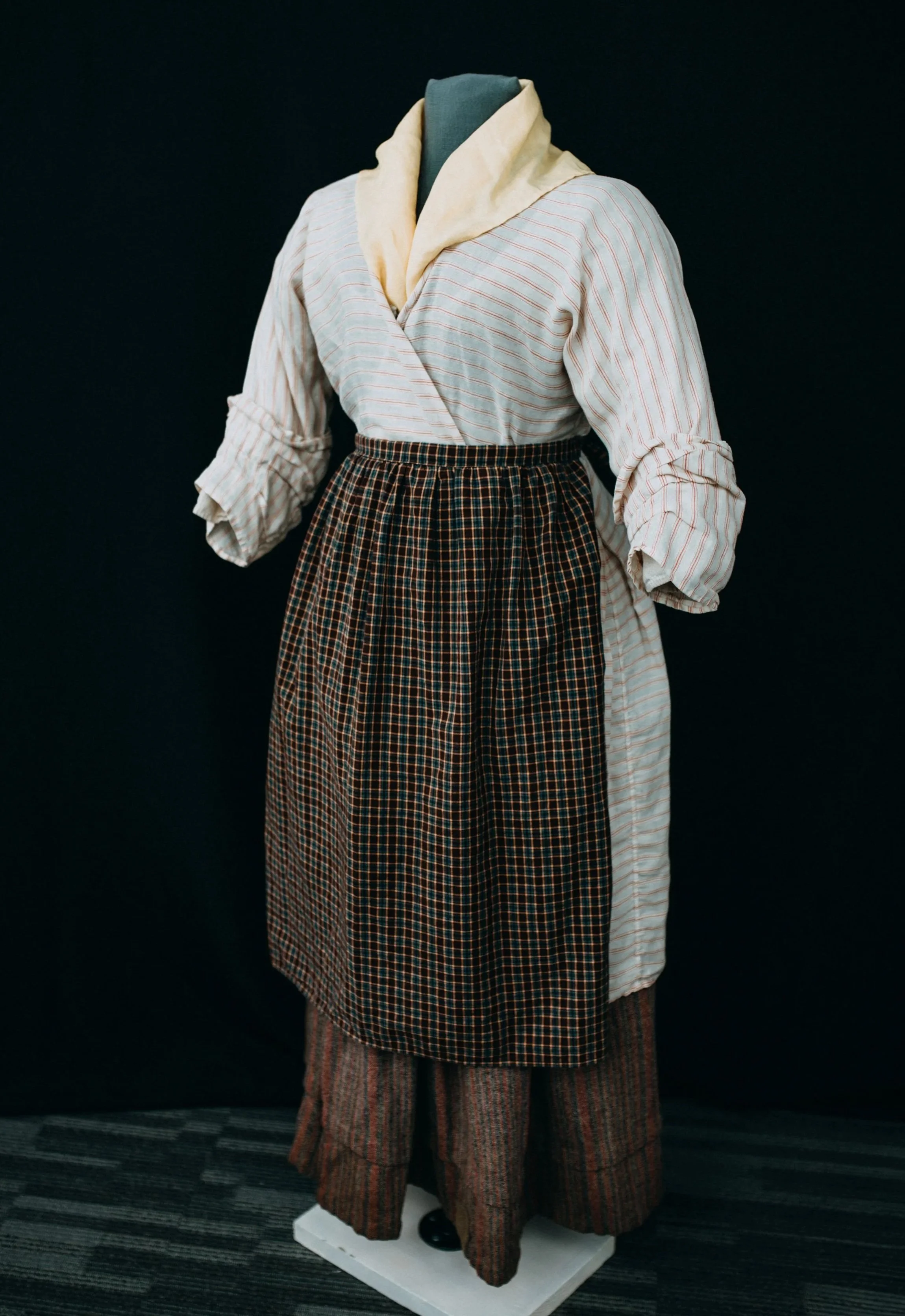
Image by Kate Simon
Go back to the beginning with a frontierswoman's clothing from around 1776: the linen shift, stays, and petticoat that an ordinary woman in the Virginia backcountry, free or enslaved, wore to labor in the fields. This reproduction was created by the Frontier Culture Museum of Virginia and is worn by the interpreters who bring that era to life. It is a portrait of a woman history almost never names, dressed in imported cloth even as her labor helped a young country learn to make its own.
Finally, arrive in the present, with the inaugural ball attire of Lt. Governor Ghazala Hashmi, who took office in January 2026 as the first Muslim woman elected to statewide office anywhere in the country and the first Asian American elected statewide in Virginia. She chose a kurta and dupatta reflecting her South Asian heritage. Her election widened who leads in Virginia, and the dress she chose carried her heritage proudly into the room with her.
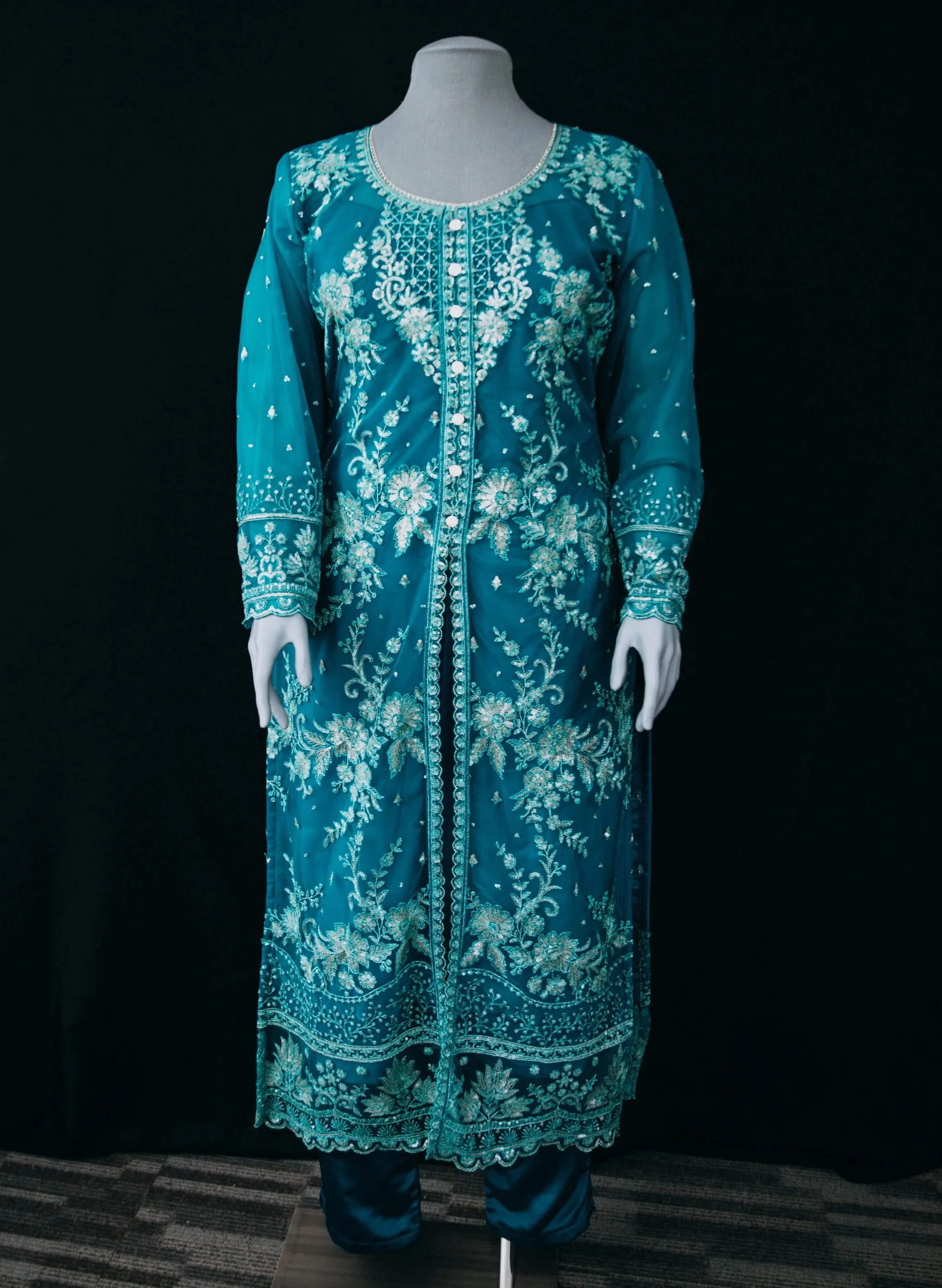
Image by Kate Simon
There is something fitting about marking the anniversary this way. We usually tell the founding story through declarations and battlefields. Remember the Ladies tells it through the women whose contributions were stitched into the country's fabric but rarely written into its records, and gives them, at last, a room of their own.
The exhibition runs for 18 months, with a fresh wave of clothing and stories rotating in at the nine-month mark, so the show you see this summer will not be the one you see next spring. Come for the beauty of the garments. Leave thinking about the women in your own life whose stories deserve to be remembered.
The grand opening was on June 14 at 3:00 p.m., with remarks by guest curator Whitney Robertson.

